


Aircraft maintenance, repair and overhaul (MRO) work often takes place in challenging conditions. Inside a hangar, space is limited, access is restricted, and lifting operations need to be carried out safely around high-value aircraft and ongoing maintenance activity.
Tasks such as engine removal, component installation, and structural work require both precision and control. However, traditional lifting equipment is not always suited to working within these confined environments.
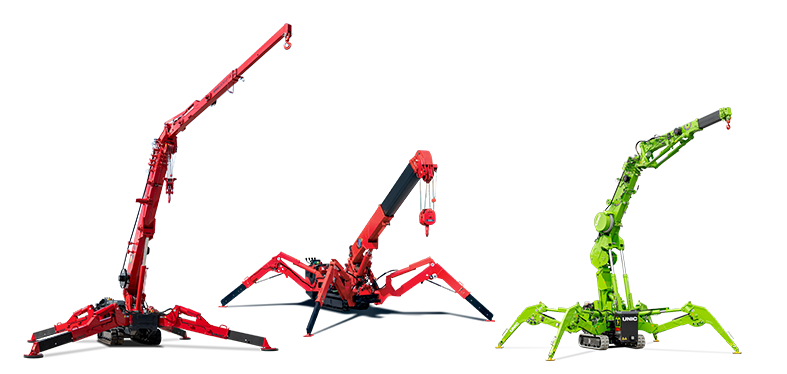
As a result, mini spider cranes are increasingly being used to support lifting operations directly inside hangars, where their compact design and flexibility offer clear advantages.
Working Within the Constraints of a Hangar Environment
Unlike open construction sites, hangars present a controlled and often congested working environment. Aircraft, access platforms, tooling, and personnel all need to operate within the same space.
This creates several challenges for lifting operations:
- Limited access and restricted working areas
- The need to work in close proximity to aircraft
- Strict indoor operating requirements
- Ongoing maintenance schedules that cannot be disrupted
In many cases, lifting equipment needs to be brought to the load, rather than the load being moved to the equipment.
A Practical Solution for Restricted Access Lifting
Mini spider cranes are well-suited to these conditions, offering a practical approach to lifting within confined spaces.
Their compact dimensions allow them to be positioned close to the aircraft, even in areas where larger cranes cannot operate. This reduces the need for additional handling and simplifies the overall lifting process.
At the same time, their design enables stable operation within tight footprints, making them suitable for use in busy hangar environments.
Precision Where It Matters
When working around aircraft, control is essential. Components such as engines and landing gear must be handled carefully and positioned accurately.
Mini spider cranes provide smooth and precise operation, allowing loads to be lifted and placed with a high level of control. This is particularly important when working within tight tolerances or in close proximity to sensitive structures.
Supporting Key MRO Activities
Within aircraft maintenance environments, compact cranes can be used across a range of lifting tasks.
Engine removal and installation
Engine handling is a key part of many MRO operations. Working within the confines of a hangar, mini spider cranes allow these lifts to be carried out safely and with greater positioning accuracy.
Component installation
From landing gear to structural components, many installations require careful handling and precise placement. Compact cranes support these operations without the need for large-scale lifting setups.
Accessing restricted areas
Certain areas within a hangar or around an aircraft may be difficult to reach with conventional equipment. Mini spider cranes can be deployed directly into these locations, allowing work to continue without disruption.
Suitable for Indoor Operation
Operating inside a hangar brings additional considerations, particularly in relation to air quality and working conditions.
Electric-powered mini spider cranes provide a practical solution for indoor use, offering:
- Zero emissions during operation
- Reduced noise levels
- Safe use within enclosed environments
This makes them well-suited to aviation facilities, where maintaining a controlled environment is essential.
Improving Efficiency on Site
In MRO operations, efficiency is closely linked to downtime. The ability to carry out lifting tasks quickly and safely helps keep maintenance schedules on track.
Mini spider cranes can be transported easily, set up quickly, and repositioned as required. This allows lifting operations to be completed with minimal disruption to surrounding work.
Supporting Modern Aircraft Maintenance
As aircraft maintenance requirements continue to evolve, so too does the need for flexible and reliable lifting solutions.
Mini spider cranes provide a practical way to carry out lifting operations within confined hangar environments, where access is limited and precision is essential.
Their ability to operate safely and efficiently in these conditions makes them a valuable addition to modern MRO operations.
